
Puppy Training in San Diego
The first few months of a puppy’s life can shape future behavior. Our San Diego puppy training programs focus on everyday obedience to help your puppy grow into a well-mannered and confident companion.
Puppy biting, accidents in the house, leash pulling, crate resistance, jumping, barking, chewing, and those random bursts of energy can make the first few months feel messy fast. Fon’s Canines helps San Diego pet owners like you build better habits from the start. The goal of puppy training is not just teaching commands. Our San Diego trainers help puppies learn how to make better choices, respond to guidance, and develop the confidence needed to succeed at home and in public settings.
Enjoy More of Puppyhood and Less Daily Frustration
What your puppy learns during these early months can shape future behavior. Start building the foundation you want while your puppy is ready to learn.
“We got our rottie from Fon’s Canines and came back for their training! Maddie was wonderfully supportive and gave very clear instructions. She was very supportive in teaching us how to improve our communication with our puppy. Prior to training, our rottie would pull at anything interesting to her. By the end of the 6 week course, our puppy was able to sit, stay, and have much better leash manners. If you are struggling with distraction and need a place to build foundations, we cannot recommend Fon’s enough!’”
Puppy Training That Helps Daily Life Feel Easier
Puppy training works best when your dog learns what to do through basic obedience, positive reinforcement, and clear training tips you can use at home. Biting, jumping, pulling, and barking come from excitement, teething, confusion, or too much freedom too soon. Structure gives your puppy a clearer path. Our puppy trainers in San Diego help turn those early habits into calmer routines at home and on walks.
Potty Training and Crate Routine
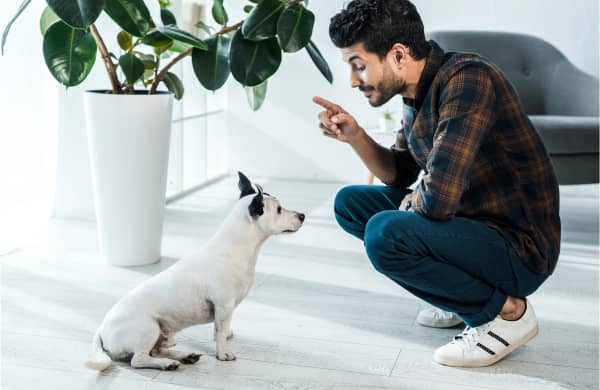
Potty training gets easier when the day has a rhythm. Meals, naps, crate breaks, and bathroom trips all connect. When that rhythm changes every day, accidents become harder to track. We see this a lot when a puppy gets the whole house too early, finds a quiet corner, and the “potty problem” is really a routine problem. A crate can help when it feels calm and predictable. Used the right way, it gives your puppy a clear place to rest, settle, and reset.
Puppy Biting and Chewing
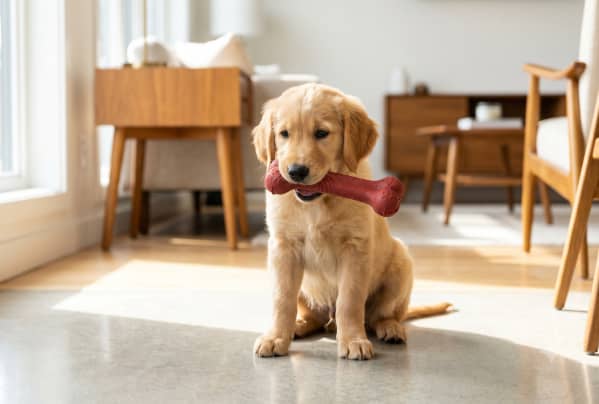
Puppies explore with their mouths. That becomes a problem when hands, sleeves, shoes, and couch legs turn into chew toys. Biting and chewing can come from teething, play, excitement, or poor impulse control. Training helps redirect that energy before rough play becomes the easiest way to get attention.
Leash Walking and Public Behavior
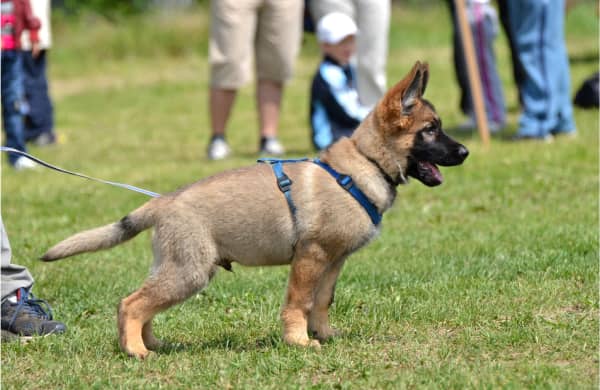
San Diego walks can be a lot for a young puppy. Parks, patios, bikes, kids, traffic, food smells, and other dogs can quickly turn a short walk into a tug-of-war. Leash work helps your puppy stay connected to you instead of chasing every distraction. It also fits local rules. In San Diego parks, trails, and canyons, dogs must stay on a leash no longer than 8 feet unless they are inside an approved off-leash area.
Socialization Without Creating Bad Habits
Socialization is not dropping your puppy into the busiest dog area and hoping for the best. It works better in small steps: people, dogs, sounds, surfaces, cars, patios, and public spaces, without overwhelming your puppy. The first three months are a major socialization window, so early exposure should be calm and controlled. Fiesta Island is a good example. It has open space, water, bikes, dogs, and people. Great for many dogs, but a lot for a puppy that has only practiced at home. Start smaller. Build confidence. Add distractions when your puppy can handle them.
Help Your Puppy Learn What To Do Next
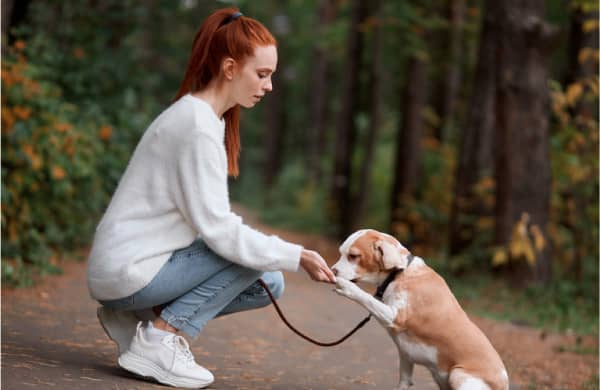
Puppies do better when the rules are clear. From potty routines to leash manners, Fon’s Canines helps San Diego puppy owners build calmer habits through practical puppy obedience training.
When Should a Puppy Start Training?
Puppies can begin foundational training and socialization as young as 8 weeks old, starting with simple routines, gentle handling, name recognition, calm rewards, and short practice sessions at home. That does not mean long obedience drills. It means your puppy is already learning from how you respond to biting, barking, potty accidents, crate resistance, jumping, and attention-seeking.
San Diego requires dogs 4 months and older to have a valid license. That is a useful reminder that puppyhood moves quickly, and early habits can shape how a dog handles public life later. A San Diego puppy meets distractions early. Apartment hallways, beach paths, patio tables, bikes, kids, other dogs, traffic, and dropped food on the sidewalk can all turn into a big deal for a young dog.
APPA reported about 71 million dog-owning households in the U.S. in 2025, and in a dog-friendly city like San Diego, that means more puppies are learning how to behave around shared public spaces from the start. At Fon’s Canines, we help owners build the basics early: leash manners, crate routines, puppy obedience, calm socialization, and simple follow-through at home.
“Our 5 month old Doberman puppy had issues with reacting horribly to any dog in her sight. Walking was a nightmare. 1st 1 hour session with Fon and not only was she walking and stopping when I said so, Fon also brought out some dogs for us to pass by. I was more nervous than the pup at this point but WoW she barely noticed them. Took a few tugs but after the 2nd time EVEN CLOSER to a strange dog she sailed by not even a whimper. Fon explained we were gonna make her feel safe so no need to go ballistic @stranger danger and it work!”
– Taylor M
Puppy Training Programs in San Diego
Puppy Problem
Recommended Training Program
Potty accidents and crate resistance
Private Puppy Training
Biting, chewing, and jumping
Private Puppy Training
Lack of structure and consistency
Board and Train for Puppies
Pulling on walks and ignoring commands
Board and Train for Puppies
Basic obedience and manners
Puppy Obedience & Manners Training
Socialization and public behavior
Puppy Obedience & Manners Training
Before You Leave Your First Session, You’ll Know
Your first session should give you more than a list of commands to practice. By the end, you should understand what your puppy needs most, how to respond at home, and which training steps make the most sense next.
Puppy Training for Different Breeds and Energy Levels
Not every puppy needs the same kind of training plan. Breed plays a role, but so do confidence, energy level, age, home routine, and how quickly your puppy gets overstimulated. A German Shepherd or Malinois puppy may pick up commands quickly, then turn around and use that same drive for nipping, pulling, jumping, or testing limits. A Labrador or Golden Retriever may be friendly and eager, but still need plenty of help with leash manners, chewing, calm greetings, and focus around distractions. Some puppies need more brain work. Some need slower exposure. Some need clearer boundaries before bold behavior turns pushy.
Match Your Puppy’s Training to Their Real Personality
Every puppy learns differently. Fon’s Canines helps match the training plan to your puppy’s temperament, routine, and goals.
How Much Does Puppy Training Cost in San Diego?
Our puppy training starts at $130 for individual lessons, and the right package depends on your puppy’s age, behavior, and training goals. Some owners need help with one specific issue, like crate resistance or leash pulling. Others want a more structured plan for puppy obedience, manners, and early socialization. Fon’s Canines can walk you through the available options during a consultation and help you choose the best puppy training package. Financing is also available for training programs and trained dogs.
“They are the best! We are taking group puppy training lessons and the instructor is amazing, very good at what she does, and is very nice. Our puppy needs a lot of training and all of the coaching is definitely making a big difference. I cannot recommend them enough.”
Start Building Better Puppy Habits Early
Puppy behavior does not have to feel like a daily guessing game. If your puppy is biting, jumping, pulling, barking, chewing, resisting the crate, or having accidents in the house, early training can give both of you a clearer path. Fon’s Canines helps San Diego puppy owners build better routines, stronger obedience, and calmer communication before small puppy problems become everyday habits. Contact us today or book puppy training to talk through the right next step for your puppy.
Frequently Asked Questions
How long does puppy training take?
Basic puppy training can show progress within a few weeks, especially for simple cues like sit, down, name response, and short leash focus. Fuller obedience and behavior work can take 4 to 6 months, depending on your puppy’s age, breed, temperament, and how consistent the practice is at home.
What age should puppy training start?
Puppy training should start as soon as your puppy comes home, commonly around 8 weeks old. At that age, the focus should be simple: potty timing, crate comfort, name response, gentle handling, calm rewards, and short practice with basic cues.
Do puppies need socialization before vaccines are complete?
Yes, puppies still need safe socialization before their vaccines are fully complete. The key socialization window is roughly 3 to 16 weeks, and waiting until around 4 months can make some puppies more fearful or unsure around new people, dogs, sounds, and places. The goal is to manage risk, not avoid exposure completely. The American Veterinary Society of Animal Behavior supports early socialization with smart disease-risk precautions, so skip crowded dog parks and unknown dogs, but introduce calm vaccinated dogs you know, short car rides, household sounds, different surfaces, gentle handling, and quiet public spaces where your puppy can observe without getting overwhelmed.
How often should puppies practice training?
Puppies should practice training in short bursts, about 5 to 10 minutes per session, 3 to 5 times a day. That works better than one long session because young puppies lose focus fast, especially when they are tired, teething, hungry, or overstimulated. The best practice usually happens during normal routines. Ask for a sit before meals, reward calm behavior before opening the crate, practice recall down a hallway, or do a few leash-focus reps before stepping outside. End while your puppy is still doing well, not after they are frustrated, mouthy, or checked out.
Our Testimonials
Visit Our Dogs

Our San Diego Location
Send us a message
Directions to Fon’s Canines Dog Training from Common Places in San Diego
San Diego International Airport to Fon’s Canines Dog Training – San Diego Dog Training
3225 N Harbor Dr, San Diego, CA 92101
Get on I-5 N from N Harbor Dr and India St
9 min (3.4 mi)
Follow I-5 N to Garnet Ave. Take exit 23B from I-5 N
5 min (5.2 mi)
Drive to Santa Fe St
3 min (1.1 mi)
Destination:
5050 Santa Fe St Suite B, San Diego, CA 92109
Downtown San Diego to Fon’s Canines Dog Training – San Diego Dog Training
Get on I-5 N
3 min (0.8 mi)
Follow I-5 N to Garnet Ave. Take exit 23B from I-5 N
6 min (6.7 mi)
Drive to Santa Fe St
3 min (1.1 mi)
Destination:
5050 Santa Fe St Suite B, San Diego, CA 92109
La Jolla to Fon’s Canines Dog Training – San Diego Dog Training
Take Fay Ave and Girard Ave to Torrey Pines Rd – 3 min (0.7 mi)
Continue on Torrey Pines Rd. Take La Jolla Pkwy and I-5 S to Damon Ave – 8 min (5.1 mi)
Follow Damon Ave and Santa Fe St to your destination – 2 min (0.5 mi)
Destination:
5050 Santa Fe St Suite B, San Diego, CA 92109
Send us a message